One Product, Eleven Time Zones: Field Notes From a Year of Running Engineering Out of Cape Town
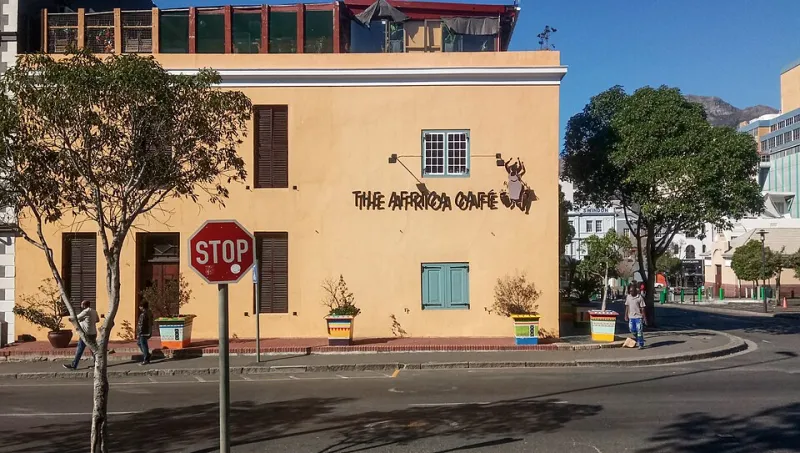
Photo: Moheen Reeyad, CC BY-SA 4.0, via Wikimedia Commons
The following is a composite account drawn from patterns we have observed across enterprise engagements. The CTO is fictional; the operational details are not.
Month Zero: The Decision
When Dana Okafor took over engineering at a Chicago-based logistics software firm, she inherited the standard American predicament: eleven open requisitions, two of them unfilled for over seven months, and a roadmap her board had already approved. Chicago salaries, she calculated, bought her roughly nine senior engineers if every offer landed.
Instead, she spent a week in Cape Town with a delivery partner and came back with a different plan: a twelve-engineer hub in South Africa, working in direct overlap with the Chicago morning, owning two product domains outright rather than serving as a ticket factory for the US team.
"The board asked the usual questions," she recalls. "Security, IP, quality. Nobody asked the question that actually determined our first year: what does the daily rhythm look like?"
The Rhythm Is the Product
The first three months taught Dana that distributed engineering succeeds or fails on rituals so mundane they never appear in vendor decks.
The handoff document. Chicago ends its day at 6 PM Central; Cape Town is already asleep. Cape Town's day ends at 6 PM SAST — 11 AM in Chicago. The only live overlap window is the Chicago morning, roughly four hours. The team learned to treat it as sacred: no status meetings scheduled inside it after the first month, because that window is where pair programming, design reviews, and incident follow-ups actually happen.
Written everything. With less than half a day of shared working time, decisions that are not written down simply evaporate. By month four, the team had settled into a discipline: every architectural decision gets a short written record in the repository, every incident gets a postmortem draft within 24 hours, and meeting outcomes land in a shared log before the meeting ends. "Documentation stopped being a virtue and became infrastructure," Dana says.
One calendar, two hemispheres. The team adopted a single shared calendar displaying both time zones on every invite. It sounds trivial. In month two, a deploy freeze was scheduled for a US holiday that was a normal working Tuesday in Cape Town, and a release went out to an unstaffed support floor. The shared calendar rule was written the next day.
The Missteps, Honestly
Not everything worked. Three failures stand out.
First, Dana initially staffed the Cape Town hub as an extension team — taking tickets from a US-owned backlog. Morale sagged within weeks. The fix was ownership: giving the hub two product domains, including the customer-facing tracking service, with a Cape Town-based engineering lead holding real authority. Engagement and output both jumped measurably.
Second, cultural friction ran quieter and deeper than expected. The American team's communication style — direct, interrupt-driven, disagreement aired loudly in meetings — collided with a more measured, written-first South African norm. Early video calls produced silence where Dana wanted debate. The resolution was structural, not interpersonal: disagreement moved into written design reviews before meetings, where the Cape Town engineers' objections turned out to be the sharpest in the company.
Third, she under-invested in travel. Two round trips in twelve months — one per direction — did more for the working relationship than any video call. "I budgeted for tooling and skimped on plane tickets," she says. "That was backwards."
The Twelve-Month Scorecard
What went right: deployment frequency tripled; production incident resolution time dropped sharply once the Cape Town morning overlap eliminated the overnight handoff gap; and the hub's two product domains shipped their roadmap on time for the first time in the company's history. Cost per delivered story point ran roughly 40% below the Chicago baseline — real, but Dana insists it was the third-most-important benefit.
What she would do differently: seed the hub with one US-based senior engineer embedded in Cape Town for the first quarter; establish the documentation norms in week one rather than month four; and hire the Cape Town engineering lead before signing the partner contract, not after.
Her summary, twelve months in: "Everyone asks about the time zones, like distance is the risk. The risk is rhythm. Get the daily rhythm right — the overlap hours, the written records, the handoffs — and eleven time zones is just a detail on your calendar."