When Houston Sleeps: Why Time-Zone Resilience Is the Metric Your Vendor Evaluation Is Missing

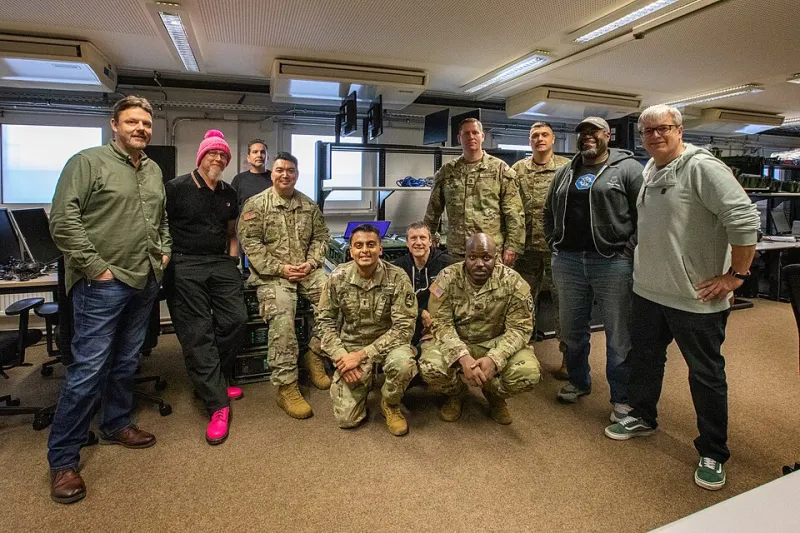
Photo: Ana Las Heras, CC BY-SA 4.0, via Wikimedia Commons
At 2:14 AM Central Time, a failover misconfiguration takes down the order-processing layer for a mid-sized retailer headquartered in Houston. The on-call engineer in Austin gets paged. He's also the engineer who was on call last weekend, and the one who will be on call next weekend. He opens the incident, starts triaging, and realizes the fix requires a change to a service owned by the offshore team — a team that, in this case, is twelve hours ahead and fast asleep.
This scenario plays out in some form at thousands of American enterprises every quarter. And it exposes a blind spot in how most companies evaluate engineering partners: we obsess over skill matrices and blended rates, then treat availability as an afterthought buried in an SLA appendix nobody reads.
The Question Your RFP Never Asks
Standard vendor assessments ask: Can this team build what we need? At what cost? How quickly? These are reasonable questions, but they share a hidden assumption — that work happens inside your business hours, on your schedule, with your weather.
The better question is this: when your systems fail at the worst possible moment, who is awake, who is accountable, and who can ship a fix before your customers notice?
We call this time-zone resilience. It is not the same as 24/7 support. Support desks acknowledge tickets; resilient engineering partnerships resolve them. The distinction shows up in mean time to recovery, which — unlike most SLA metrics — is measured against your outage clock, not your vendor's business hours.
The Geography of the 2 AM Problem
Here is an uncomfortable arithmetic fact about traditional offshore models: an engineering hub in Bangalore is roughly 10.5 to 12.5 hours ahead of US Central Time. When your Houston data center goes down at 2 AM, it is mid-afternoon in India — technically convenient. But the reverse is also true: when your US team starts work at 8 AM, the offshore team has already gone home. Handoffs happen twice a day, at the worst possible moments, and the team that built the system is never awake at the same time as the team operating it.
South Africa's time zone is different in a way that matters enormously. Cape Town and Johannesburg sit within one or two hours of Central European Time, which means a South African engineering team overlaps the US morning directly. When your incident starts at 2 AM Central, it is 9 or 10 AM in Cape Town — a full engineering team, mid-sprint, with context, tooling access, and the authority to deploy. When your executives arrive at the office, the fix is in production and the postmortem draft is waiting in their inbox.
A follow-the-sun model built on this geography doesn't just shorten outages. It redistributes the human cost of on-call, which is why retention on distributed teams with genuine overlap hours tends to beat the burnout-and-churn cycle of single-region on-call rotations.
Stress-Testing the SLA: A Practical Framework
Most service level agreements are written to be breached gracefully, not honored usefully. Before signing, run every prospective partner through four failure scenarios:
Scenario one: the 2 AM database corruption. Ask the vendor to walk through, minute by minute, who responds. If the answer involves "escalating to a team that will pick this up in the morning," you have your answer. A resilient partner names the specific role — not the region — that owns the response.
Scenario two: the ambiguous partial outage. Systems are degraded, not down. Monitoring is green, customers are angry. Ask who has the authority to declare an incident and roll back a release without a US-based approver. If every decision routes through a sleeping executive, your MTTR is governed by someone's REM cycle.
Scenario three: the handoff failure. The overnight team stabilizes but cannot fully resolve. What gets written down, where, and how does the incoming team consume it? Ask to see a real incident handoff document from a prior engagement. Vagueness here predicts pain later.
Scenario four: the second-order failure. The fix for the outage breaks something else. Does the partner team have staging environments, deployment pipelines, and test coverage sufficient to ship a corrective change under pressure — without a change advisory board meeting that convenes in nine hours?
Score each scenario on a simple scale: does the vendor's answer describe a person with a pager and production access, or a process with a queue?
From Liability to Advantage
The enterprises that get this right stop thinking of incident response as an insurance cost and start treating it as a competitive capability. When your recovery time is measured in minutes because a fully staffed engineering team shares your morning, you can make commitments to your customers that competitors with single-region teams cannot match.
That is the quiet argument for partnerships built on complementary time zones rather than merely complementary costs. The rate card tells you what an hour of engineering costs. The clock tells you what an hour of downtime costs. Only one of those numbers shows up on your income statement the morning after a 2 AM failure — and it is rarely the one your procurement team optimized.
The next time you evaluate an engineering partner, add one question to the scorecard: show me who is awake at 2 AM, and what they can do without calling me. The vendors who answer well are the ones worth signing.