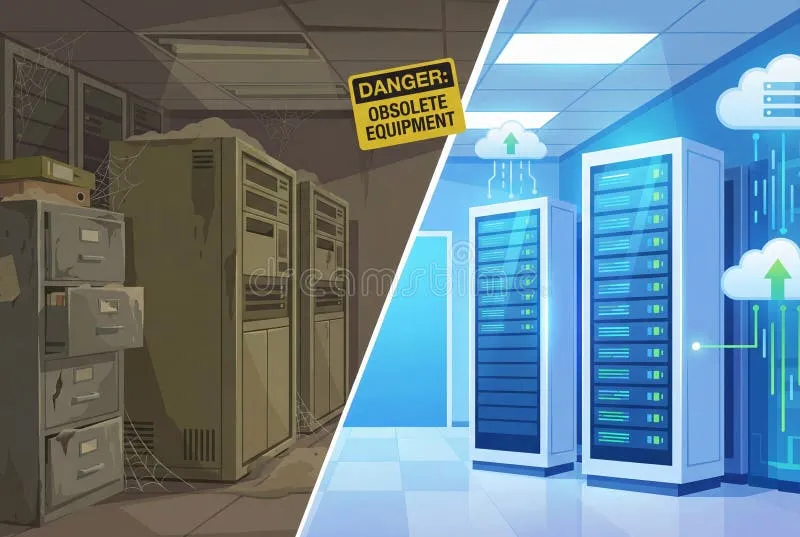
Handover Is Not a Date: Designing Knowledge Transfer as a Shippable Product

Photo by Photo by Vitaly Gariev on Unsplash on Unsplash
Most enterprise engagements with an offshore engineering partner are structured around a single quiet assumption: knowledge transfer is a phase with a start date and an end date, and when the end date arrives, the receiving team is presumed competent. Procurement likes this because it is legible. Program managers like it because it closes a workstream. The engineers who inherit the codebase rarely share the enthusiasm.
A handover completed on schedule and a handover completed in substance are different events, and only one of them appears in a status report. A Cape Town pod can attend every walkthrough, sign every attendance sheet, and still spend the following six months rediscovering why a retry queue is capped at a particular depth, which downstream service depends on a legacy header, and why one integration is deliberately and expensively slow.
That is not a failure of effort. It is a failure of framing. Knowledge transfer treated as a phase is an administrative exercise. Knowledge transfer treated as a product has a backlog, an owner, acceptance criteria, and a lifecycle that outlives delivery.
The calendar is the wrong instrument
A calendar measures presence. It does not measure comprehension, and it certainly does not measure the ability of a new team to change a system safely at two in the morning without calling the person who built it.
Consider what a ninety-day window actually guarantees. It guarantees that ninety days elapsed. Everything else, from the accuracy of the architecture diagram to whether anyone can explain the feature flag that has been permanently on since 2022, is left to professional courtesy.
When the receiving organization is a U.S. product team and the sending organization is an engineering pod several time zones east, that ambiguity compounds. Questions that would be resolved by a hallway conversation during overlapping hours become asynchronous threads. Small misunderstandings age into assumptions. Assumptions harden into undocumented behavior, and undocumented behavior becomes the reason nobody wants to touch a service.
Treat transfer as a product with a backlog
The reframing is neither radical nor expensive. It requires that someone own the outcome, that the work be itemized, and that completion be demonstrable rather than declared.
A workable structure looks like this. The transfer backlog is explicit and visible to both organizations: architecture decision records that are missing, runbooks that exist only in someone's memory, alert thresholds nobody has justified, third-party credentials with unclear owners. Items are prioritized by risk, not by convenience. The highest-value items are the ones that would cause the longest outage if the current team disappeared tomorrow.
Each item has a definition of done that a stranger could verify. A runbook is done when an engineer unfamiliar with the service has used it to complete the task without assistance. An architecture note is done when it explains a decision and the alternatives that were rejected. A dependency map is done when it names the owner, the contract, and the failure mode for each external system.
This is unglamorous work, which is precisely why it needs a backlog and a name attached to it. Unglamorous work without a structure evaporates.
Documentation that lives where the code lives
Enterprises have spent two decades producing documentation that goes stale within a quarter. The pattern is familiar: a wiki page is written at a project's midpoint, praised in a steering committee, and abandoned by the next release.
Documentation as code changes the economics. Architecture notes, runbooks, and decision records live in the same repository as the service they describe. They are reviewed in the same pull requests. When a change renders a runbook inaccurate, the reviewer can see it and say so. When a service is deprecated, the documentation is removed in the same commit, which is the only reliable way to prevent a knowledge base from becoming a graveyard of confident misinformation.
The practical benefit for a U.S. buyer is auditability. You can inspect a repository and see whether documentation is maintained alongside code. You cannot inspect a folder of slide decks and reach the same conclusion.
Pairing rotations with a purpose
Pairing is often deployed as a gesture rather than a method. Two engineers sit together for a week, one talks, one nods, and the exercise ends when the calendar invite expires.
Rotation with intent is different. It has a direction and a duration tied to specific outcomes. The incoming engineer drives, and the outgoing engineer reviews. The incoming engineer writes the change, deploys it, and handles the first incident. Competence is demonstrated through execution, not attendance.
Rotations should also run in both directions. A U.S. product owner who has never seen how the Cape Town pod triages production issues will keep designing work that ignores operational reality. Reverse shadowing, even briefly, corrects assumptions that no document will fix.
The critical design choice is to rotate across failure modes, not just across features. Anyone can be walked through the happy path. The knowledge that matters is held in the exception handlers, the rollback procedures, and the awkward workaround that exists because a vendor's API behaves unpredictably under load.
Ownership maps beat org charts
Organizations confuse the two constantly. An org chart says who reports to whom. An ownership map says who is accountable for what, and it survives reorganizations because it is anchored to systems rather than to people.
For every service, dataset, integration, and scheduled job, the map should name a primary owner, a secondary owner, and an escalation path. It should also flag single points of failure, the components where exactly one person holds the knowledge. Those flags are the real handover backlog, and they should be tracked as a burn-down chart the same way a team tracks defects.
A pod that can show its single-point-of-failure count falling month over month is telling you something a slide deck cannot.
Exit criteria you can test
The final discipline is to write exit criteria that resist interpretation. Not "team is trained" but "two engineers from the receiving team have independently resolved a severity-two incident in this service." Not "documentation delivered" but "a new engineer provisioned a local environment using only the repository's instructions, within one working day, without contacting the original author."
These criteria are uncomfortable because they can fail. That is the point. A criterion that cannot fail is not a criterion; it is a formality with better formatting.
What belongs in the statement of work
U.S. buyers who want durable outcomes should push four things into the commercial documents. First, a named transfer owner on the partner side with allocated capacity, not a nominal role. Second, a defined artifact list with acceptance tests. Third, a measurement cadence, reviewed monthly, on single-point-of-failure reduction. Fourth, a tail period after go-live during which the partner remains accountable for defects traced to undocumented behavior.
The ninety-day handover is not inherently wrong. It is simply incomplete. A calendar tells you when something ended. A product tells you whether it works.